
Catechetical Foundations
of the Charisms
Selections from the Catechism of the Catholic Church

1. Prayer
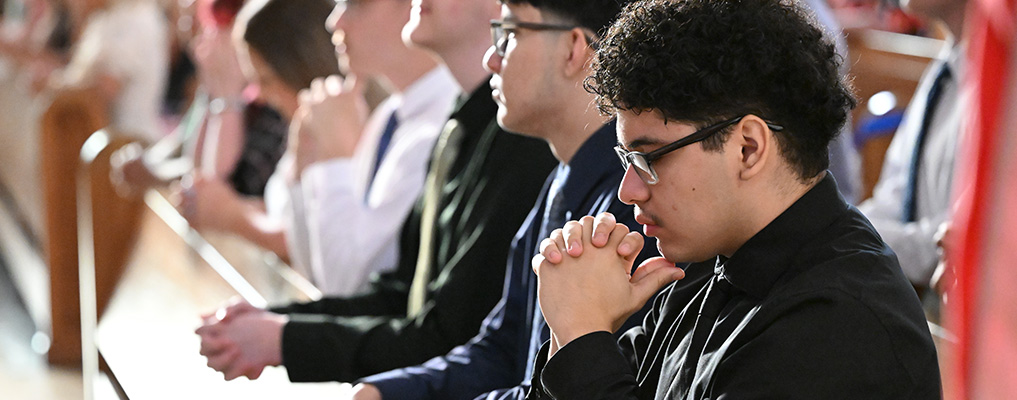
Duchesne Pioneers pray without ceasing.
Read Catechism Passages
In the New Covenant, prayer is the living relationship of the children of God with their Father who is good beyond measure, with his Son Jesus Christ and with the Holy Spirit.
Prayer is the life of the new heart. It ought to animate us at every moment.
The drama of prayer is fully revealed to us in the Word who became flesh and dwells among us. To seek to understand his prayer through what his witnesses proclaim to us in the Gospel is to approach the holy Lord Jesus as Moses approached the burning bush: first to contemplate him in prayer, then to hear how he teaches us to pray, in order to know how he hears our prayer.
It is always possible to pray: The time of the Christian is that of the risen Christ who is with us always, no matter what tempests may arise. Our time is in the hands of God:

2. Missionary Discipleship
Duchesne Pioneers follow Jesus and bring others to Jesus.
Read Catechism Passages
Reborn as sons of God, the baptized must profess before men the faith they have received from God through the Church and participate in the apostolic and missionary activity of the People of God.
The fidelity of the baptized is a primordial condition for the proclamation of the Gospel and for the Church’s mission in the world. In order that the message of salvation can show the power of its truth and radiance before men, it must be authenticated by the witness of the life of Christians. “The witness of a Christian life and good works done in a supernatural spirit have great power to draw men to the faith and to God.”
It is from God’s love for all men that the Church in every age receives both the obligation and the vigor of her missionary dynamism, “for the love of Christ urges us on.” Indeed, God “desires all men to be saved and to come to the knowledge of the truth”; that is, God wills the salvation of everyone through the knowledge of the truth. Salvation is found in the truth. Those who obey the prompting of the Spirit of truth are already on the way of salvation. But the Church, to whom this truth has been entrusted, must go out to meet their desire, so as to bring them the truth. Because she believes in God’s universal plan of salvation, the Church must be missionary.
Christ Jesus always did what was pleasing to the Father, and always lived in perfect communion with him. Likewise Christ’s disciples are invited to live in the sight of the Father “who sees in secret,” in order to become “perfect as your heavenly Father is perfect.”

3. Community
Duchesne Pioneers love one another as Christ loves us.
Read Catechism Passages
All men are called to the same end: God himself. There is a certain resemblance between the unity of the divine persons and the fraternity that men are to establish among themselves in truth and love. Love of neighbor is inseparable from love for God.
Created in the image of the one God and equally endowed with rational souls, all men have the same nature and the same origin. Redeemed by the sacrifice of Christ, all are called to participate in the same divine beatitude: all therefore enjoy an equal dignity.
In the sanctorum communio, “None of us lives to himself, and none of us dies to himself.” “If one member suffers, all suffer together; if one member is honored, all rejoice together. Now you are the body of Christ and individually members of it.” “Charity does not insist on its own way.” In this solidarity with all men, living or dead, which is founded on the communion of saints, the least of our acts done in charity redounds to the profit of all. Every sin harms this communion.
For if we continue to love one another and to join in praising the Most Holy Trinity — all of us who are sons of God and form one family in Christ — we will be faithful to the deepest vocation of the Church.

4. Pioneer Spirit
Duchesne Pioneers rely on God to persevere through challenges.
Read Catechism Passages
Fortitude is the moral virtue that ensures firmness in difficulties and constancy in the pursuit of the good. It strengthens the resolve to resist temptations and to overcome obstacles in the moral life.
The virtue of fortitude enables one to conquer fear, even fear of death, and to face trials and persecutions. It disposes one even to renounce and sacrifice his life in defense of a just cause. “The Lord is my strength and my song.” “In the world you have tribulation; but be of good cheer, I have overcome the world.”
The way of perfection passes by way of the Cross. There is no holiness without renunciation and spiritual battle. Spiritual progress entails the ascesis and mortification that gradually lead to living in the peace and joy of the Beatitudes:
The virtue of hope responds to the aspiration to happiness which God has placed in the heart of every man; it takes up the hopes that inspire men’s activities and purifies them so as to order them to the Kingdom of heaven; it keeps man from discouragement; it sustains him during times of abandonment; it opens up his heart in expectation of eternal beatitude. Buoyed up by hope, he is preserved from selfishness and led to the happiness that flows from charity.
Creation has its own goodness and proper perfection, but it did not spring forth complete from the hands of the Creator. The universe was created “in a state of journeying” (in statu viae) toward an ultimate perfection yet to be attained, to which God has destined it. We call “divine providence” the dispositions by which God guides his creation toward this perfection: